
Our Sutton driveway and paving project combines pale gravel, a curved paved approach and brick detailing. The layout gives the frontage a clear structure, with a dedicated route to the front door and a green lawn balancing the driveway surface.
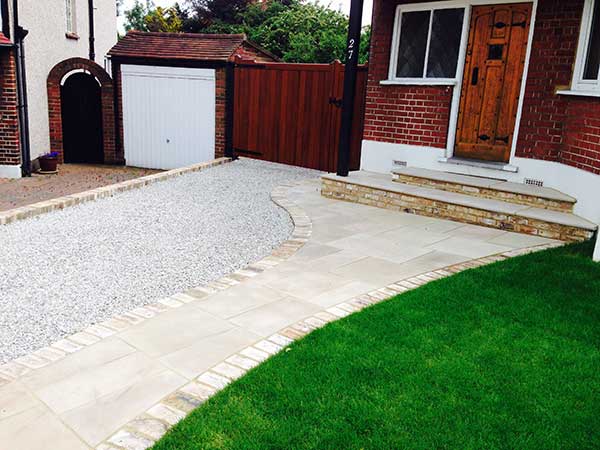
This Sutton frontage brings together contrasting textures in a simple, coordinated layout. Pale gravel forms the main driveway surface, while larger paving slabs create a defined approach to the entrance.
The paved route curves gently between the gravel and lawn before widening beside the front steps. This gives visitors a clear path towards the house and introduces a softer outline across the frontage.
Small edging blocks trace the curve, separating the different surfaces and adding detail around the larger slabs. Their varied tones connect the pale paving with the warmer brickwork of the property.
At the doorway, broad steps form a prominent entrance feature. The light coloured treads and brick faced risers sit comfortably alongside the surrounding materials, bringing the driveway, path and house together visually.
The gravel area continues towards the timber side gates, maintaining a consistent surface along the side of the house. With the gates open, the view extends further into the property, giving the frontage a sense of depth.
A low brick boundary defines the driveway beside the neighbouring block paving. Its warm colours complement the house and provide a clear edge to the lighter gravel.
The lawn introduces a contrasting green area beside the entrance path. Retaining this softer element helps balance the expanse of stone and gravel, giving the frontage the feel of a garden as well as a driveway.
The strength of this Sutton project lies in how the details work together. The curved path makes the entrance easy to identify, the edging defines each surface, and the restrained material palette suits the traditional property.
The finished arrangement creates an attractive approach to the home, with distinct areas for vehicle access, walking and greenery.

Some movement is normal with loose gravel, particularly where vehicles turn or people cross between surfaces. Defined edging helps contain it, but occasional sweeping and raking will still be needed. We consider the gravel size, depth and boundary details when planning a driveway to help limit displacement.
A paved route provides a firmer, more consistent walking surface between the entrance and the house. This can be useful for wheeled bins, pushchairs and visitors who find loose gravel difficult underfoot. Here, the separate path also makes the approach to the front door clear.
We recommend clearing leaves, removing weeds while small and occasionally raking displaced gravel back into place. Areas receiving repeated vehicle traffic may need more attention, and the surface may require topping up over time. Gravel avoids some paving maintenance tasks, but it still needs regular care.
It can be, but the saving depends on the ground preparation and specification. Excavation, the supporting base, edging, drainage and access all affect the cost. A layout like this concentrates paving along the walking route while using gravel across the larger area. We would compare complete installation costs when discussing the options.

